Why should I learn it?
These positions occur so often that every player who wants to be minimally good at endings should have an immediate understanding of them. Positions with King and pawn on the sixth rank vs King are all either a victory or a draw. Knowing when they are the one, when the other, is a vital skill for games when you are short on time and have to make a split-second decision.
When do I use it?
Most King and pawn vs King endings have at least a possibility of reaching such positions. Understanding them makes sure you win the winnable positions and, when defending against the side with the plus pawn, draw the drawable ones.
Link to Practice Problems
Blocked pawn on the 6th rank problem #1
Step-by-Step Guide on Blocked pawn on the 6th
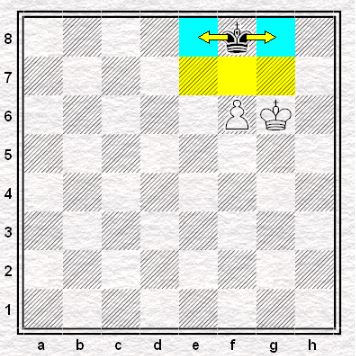
White to move. As you can see in the diagram, White has successfully controlled the 7th rank, thus leaving only the e8 and g8 squares for Black to retreat to.
- f7
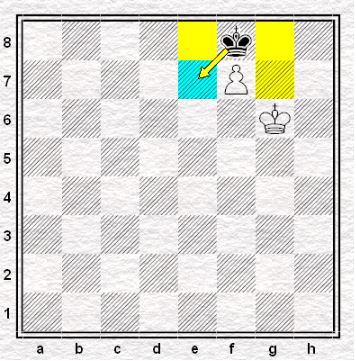
The only winning move. Take note that after f7, the only square Black could retreat to is e7.
Any king move here would just give Black a chance to force a draw with 1. …Kf7.
- …Ke7
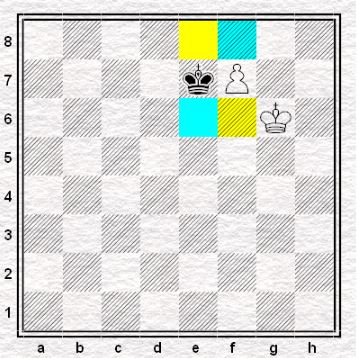
This move is forced.
- Kg7
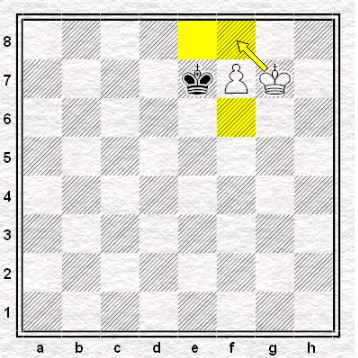
Any other move would just let Black take the pawn. Also, thanks to this move, we have secured f8 for our queening pawn.
- …Ke6
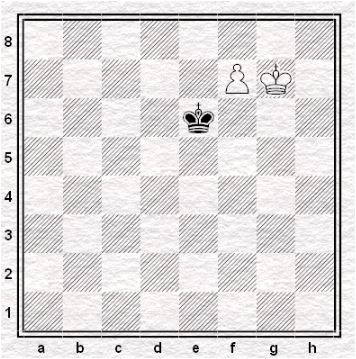
Any other move would be just as bad.
- f8=Q
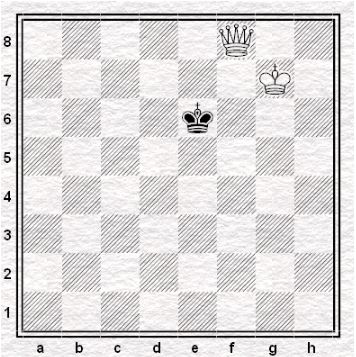
The pawn promotes into a queen and White should get an easy win.