Why should I learn it?
Knights and pawns have an interesting dynamic. Surprisingly, in many endgame positions the Knight, a much stronger piece in any other phase of the game, finds it hard to cope with a passed pawn—too hard, as in this case. Knowing and understanding this will up your endgame strength by a considerable margin against opponents who do not.
When do I use it?
At any time when pawns face Knights in an endgame, the principles learned here will come into play. You will know better than to allow an opponent to push a passed Rook pawn too far if you are the one with the defending Knight, for instance. And you will be able to convert not a few Knight and pawn vs Knight and pawn endgames into winning pawn vs Knight endgames.
Link to Practice Problems
Knights vs one pawn problem #1
Step-by-Step Guide on Knight vs individual pawn
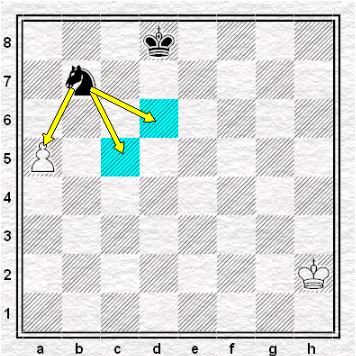
It is White to move. Take note that the Black knight only has 3 squares it could move to.
- e6
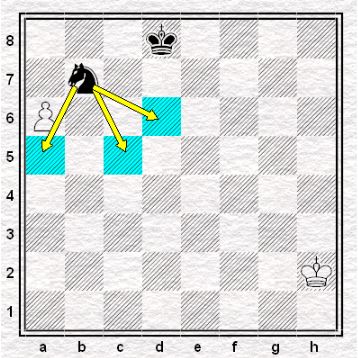
The pawn escapes the knight’s clutches just by moving forward.
- …Kc7
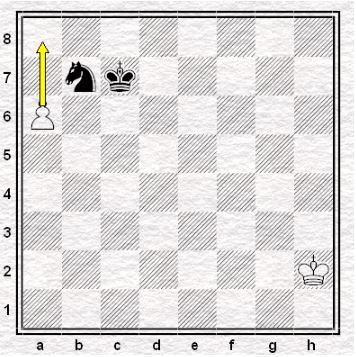
The Black king decides to close in the pawn. However, the pawn still has a trump card up its sleeve.
- a7!
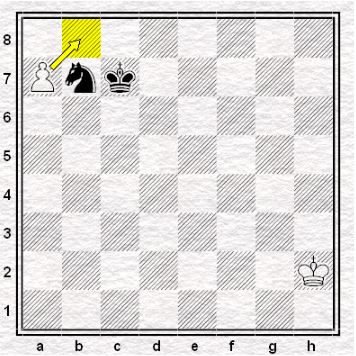
Onwards! A little bit more and the pawn promotes into a queen! After 2. a7!, the king could no longer give chase via b8. The knight is useless and blocks off its own king.
- …Nd6
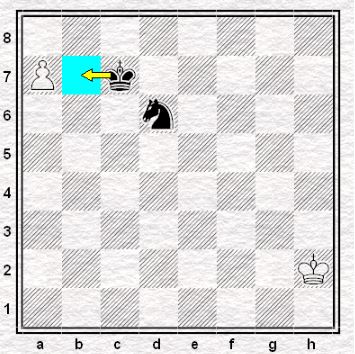
A clearance move. Handing the b7 square over for the Black king to use. But the pawn has nothing in mind but one thing…
- a8=Q
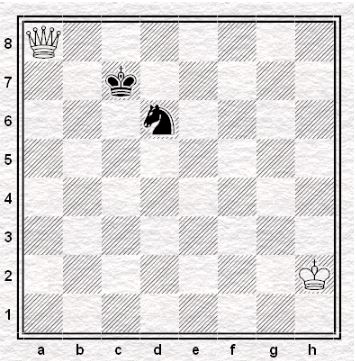
Onwards!! The pawn gets promoted into a queen! Promoting it into any other piece would just result in a draw. Even a rook simply won’t be enough when Black still has a major piece left.