Why should I learn it?
You’ll be familiar with this maneuver if you’ve gone through this guide from the beginning, but it’s never too much to review it.
When do I use it?
As formerly mentioned, you use it to keep the two pawns from being taken by the opposite King when your own King is too far to play the protecting guard. This scheme is enough to keep them safe while your King makes its way towards them.
Link to Practice Problems
Two passed pawns separated by one file problem #1
Step-by-Step Guide on Two passed pawns separated by one file
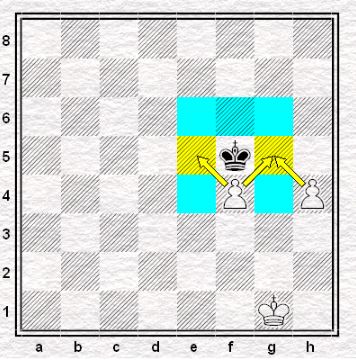
White to move. In this position, Black is threatening to take the f-pawn and the White king is too far away to protect it. However, we could still protect the pawns from frontal attacks by the threat of promoting, while bringing the King in the meantime.
- h5
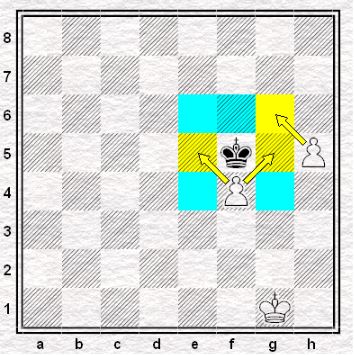
Looking to promote one of the pawns.
If Black takes the f-pawn, the h-pawn would then be unstoppable.
After this move, the h-pawn now controls g6. And since the f-pawn already controls g5, the Black king is unable to properly give chase.
- …Kf6
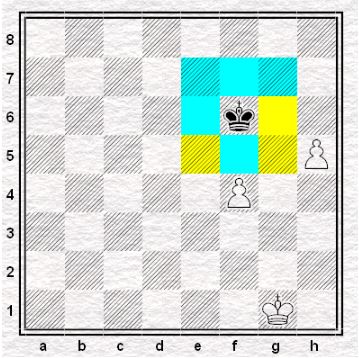
Trying to chase the h-pawn.
(1. …Kxf4 2. h6 and the h-pawn won’t look back until it reaches promotion.)
- Kg2
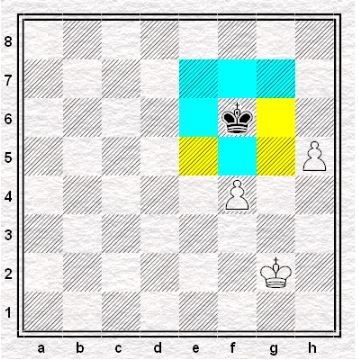
Moving any of our pawns right now would let at least one of them be eliminated. This is why the king makes a move for the sake of tempo.
- …Kg7
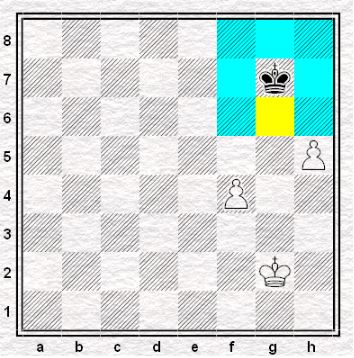
Still looking to give chase to the h-pawn from the front.
(2. …Kf5 is met by any king move from White.)
- f5
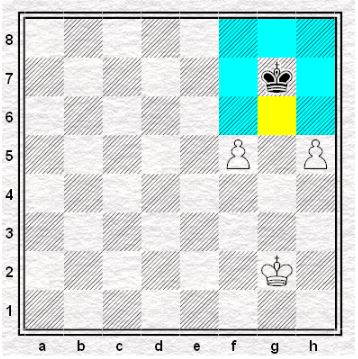
This move lets us repeat the pattern from the 1st move if Black steps into the 6th rank next.
- …Kf6
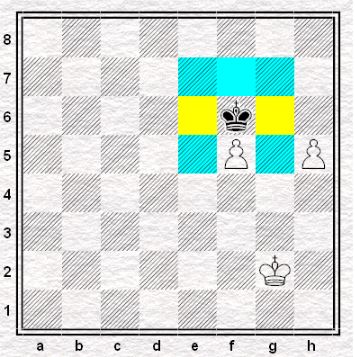
Threatening to take the f-pawn once again.
(If 3. …Kh6, then we generate the same pattern with 4. f6)
- h6
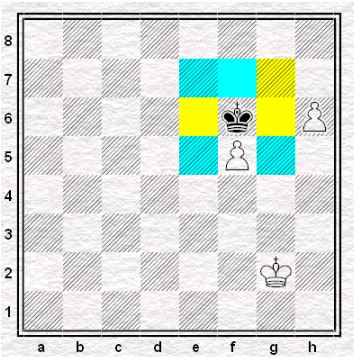
Black is still unable to take the pawn.
- …Kf7
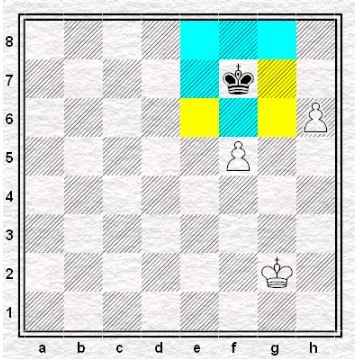
Notice that we have repeated the same pattern from the start. And since moving any of our pawns would be lethal, we would have to move our king once again on the next move.
- Kg3
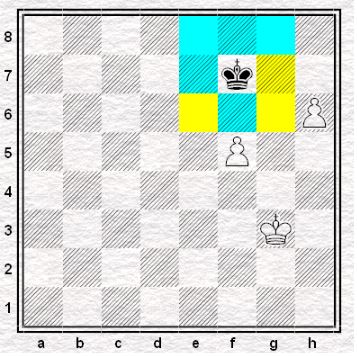
Again, to gain tempo. This also lets the White king move in to support the pawns just in case.
- …Kg8
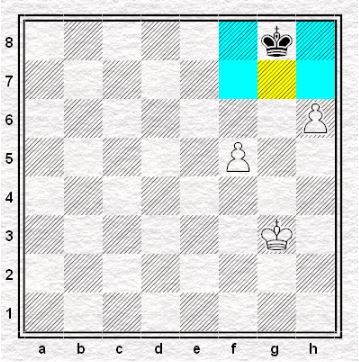
This and any other move still won’t stop White from queening. If Black had jumped to f6 then White responds with a king move once more.
- f6
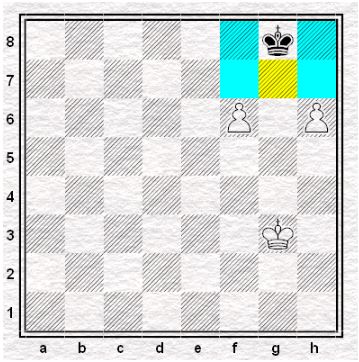
Same pattern as before.
- …Kf7
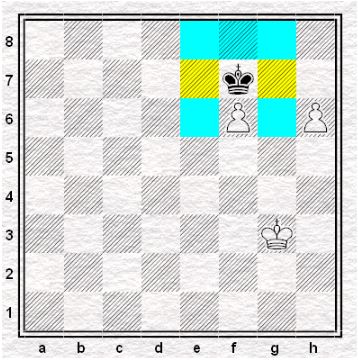
Now the h-pawn is unstoppable. If 6. …Kh7, then the f-pawn would then be unstoppable.
- h7
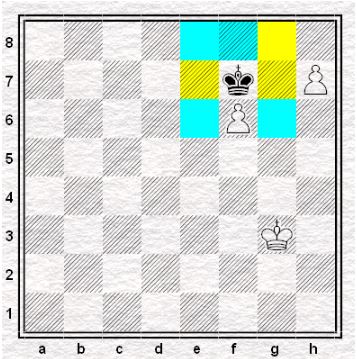
The h-pawn is free to jump into h8 next since the g7 and g8 squares are inaccessible to Black.
- …Kxf6
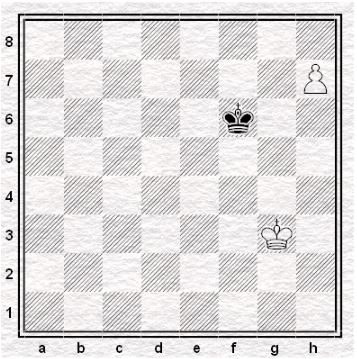
Eliminating the other pawn is all Black could do in this situation.
- h8=Q
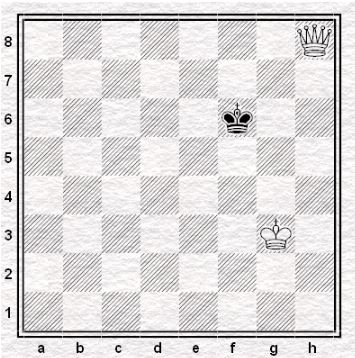
Not promoting the pawn now would pretty much result in a draw.